

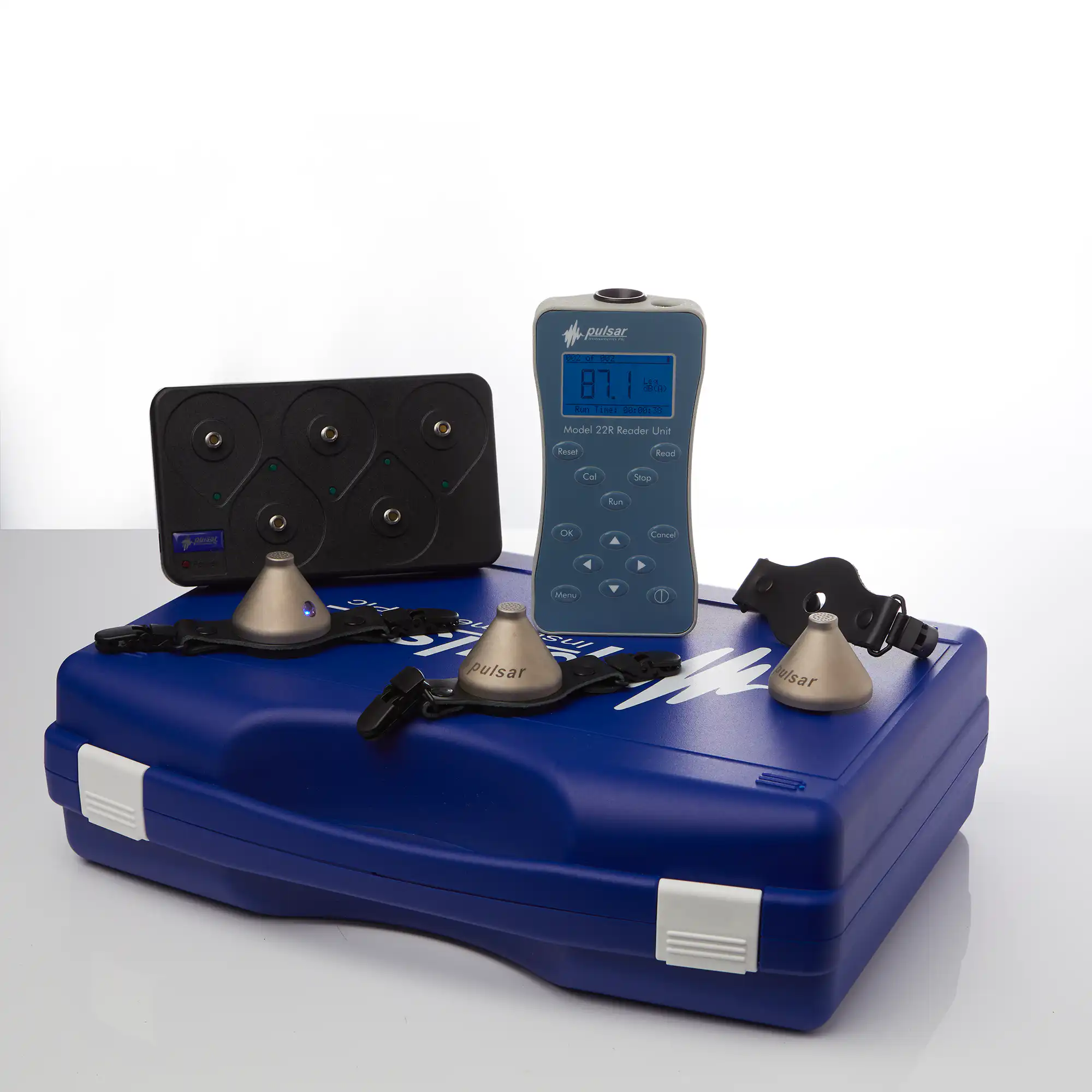
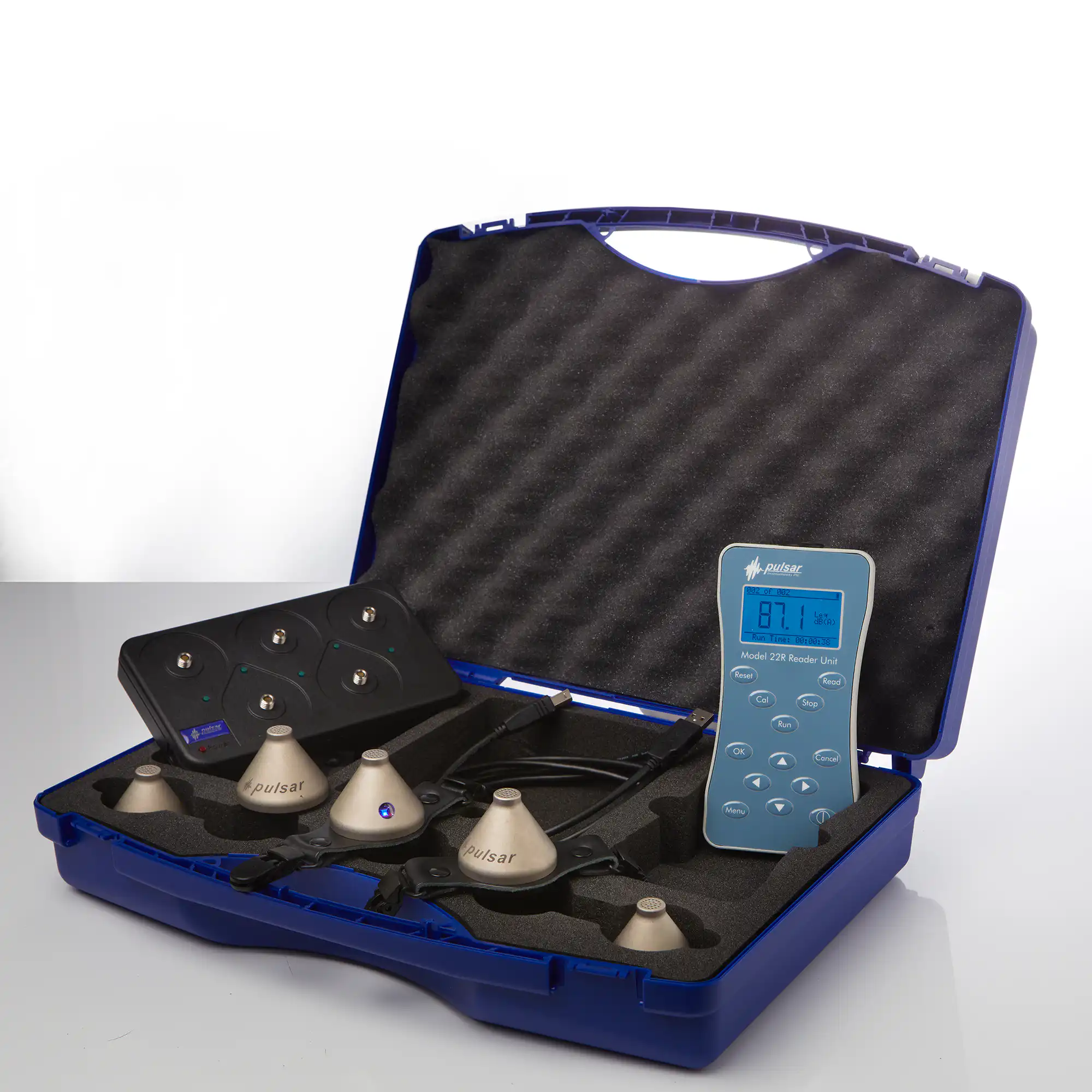
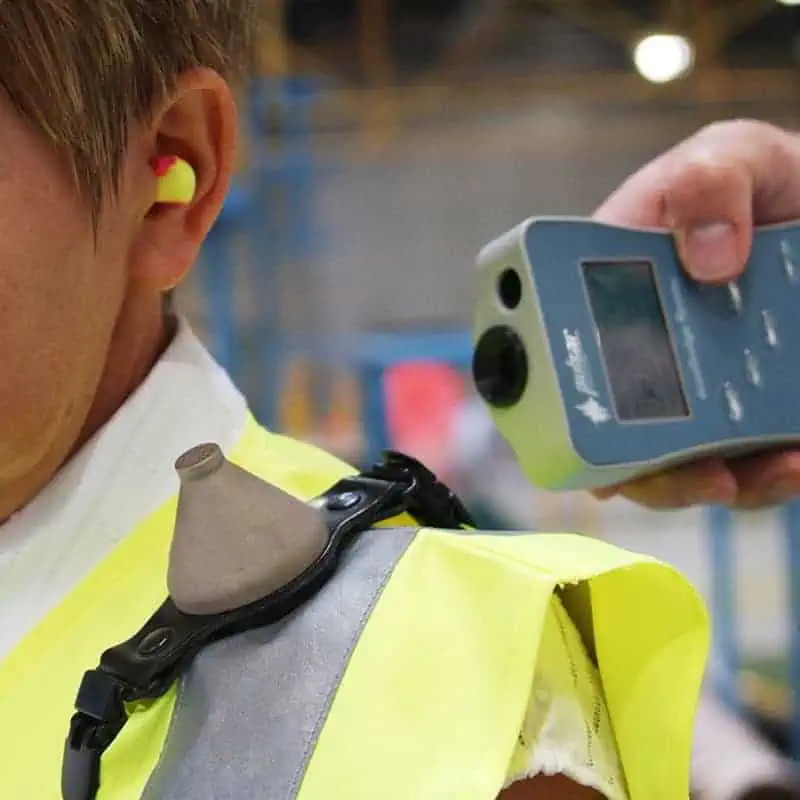
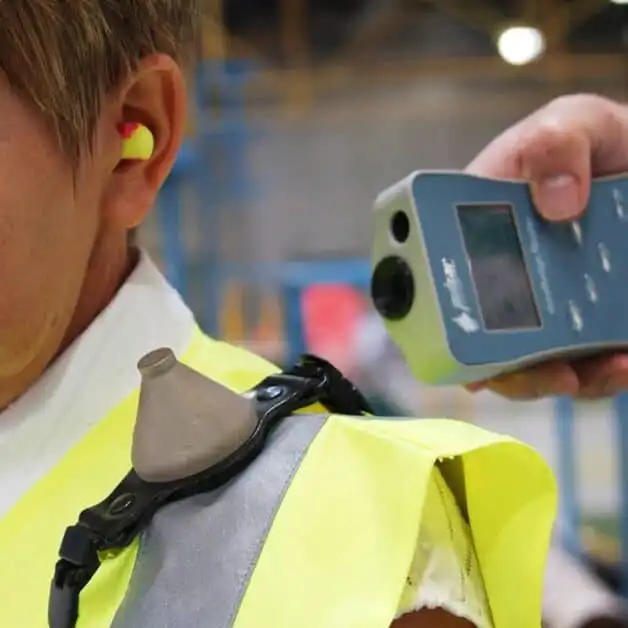
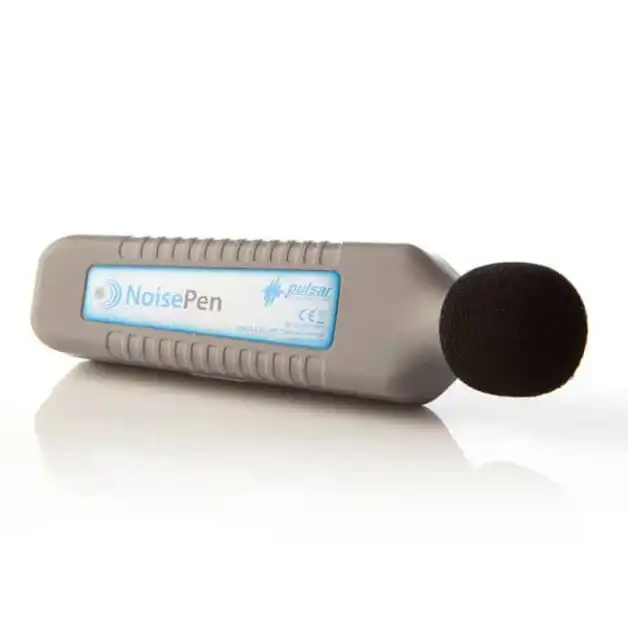
The NoiseBadge is a durable, shoulder-mounted personal noise dosimeter designed for monitoring an individual’s daily noise exposure in demanding environments. Fully compliant with IEC 61252:1993 and ANSI S1.25:1991, the NoiseBadge captures all essential occupational noise parameters, including LAeq, LEP,d (LEX,8h), LCPeak, TWA and % Dose over a full working day. With no buttons, screens or cables, it cannot be adjusted or tampered with during use, ensuring reliable and accurate measurements.
Suitable for Occupational Noise Exposure Assessments Worldwide
The NoiseBadge is ideal for monitoring an individual’s noise exposure throughout the day, particularly where employees move between different tasks or locations. It covers a dynamic measurement range of 70 dB(A) to 130 dB(A) and is suitable for occupational noise assessments across a wide range of industries, including construction, demolition and heavy manufacturing.
To meet regulations worldwide, the NoiseBadge supports exchange rates of 3 dB, 4 dB, or 5 dB. It measures on two channels simultaneously, with channel 1 configurable and channel 2 fixed to ISO’s 3 dB measurements, allowing compliance with different international noise regulations in a single measurement.
Built for Durability and Daily Use
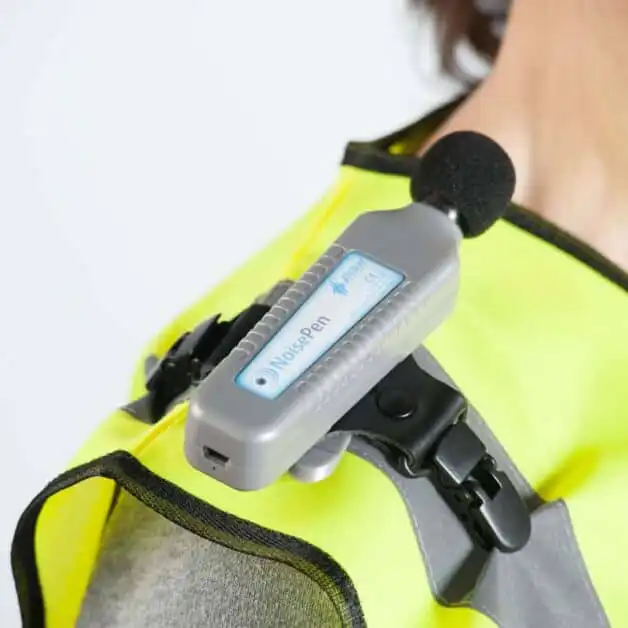
Constructed with a robust metal casing, the NoiseBadge meets the demands of environments where it is prone to frequent knocks or drops. Its lightweight, cable-free design makes it comfortable to wear on the shoulder using the provided leather mounting strap, and with a rechargeable battery providing up to 20 hours of operation, the NoiseBadge can run for a full shift.
Fast Setup and Data Download with the Reader Unit
The NoiseBadge requires a Reader Unit for configuration, calibration and data download. All settings are controlled through the Reader rather than on the dosimeter itself, meaning the badges remain tamper-proof while in use. The Reader allows multiple NoiseBadges to be activated at the start of a shift and stopped again at the end. Measurements can also be viewed directly on the Reader’s clear backlit LCD display before downloading to AnalyzerPlus.
Straightforward Reporting with AnalyzerPlus
Once data is downloaded via the Reader Unit, measurements can be viewed, analysed and reported on using our licence-free AnalyzerPlus software. Time History data shows how exposure changes throughout the day, helping you identify high-risk activities or noise sources.
Intrinsically Safe Option Available
For hazardous or potentially explosive atmospheres, the Intrinsically Safe NoiseBadge provides a certified solution for use in mining, petrochemical facilities and other environments where combustion risks must be carefully managed. It measures the same occupational noise parameters as the NoiseBadge, allowing you to choose the dosimeter best suited to your working environment.
Victoria Carpets –
We purchased a Pulsar noise dosemeter badge and supporting instrumentation last year along with a familiarisation Noise Awareness training day. The equipment is certainly robust, unobtrusive and ‘user friendly’ and provides a real time analysis of workplace noise. Some of the credit for the Company award of OHSAS 18001 accreditation last year must be directed at Pulsar due to the favourable observations made by the external auditor on the management of noise at work.
ZSL (Whipsnade Zoo) WT Partnership (UK and Europe) –
Pulsar Model 22 noise dosebadge system is an all singing, all dancing system that is genuinely robust and does exactly as promised. I am happy to endorse this product for any environment where one would allow people to work.
English National Opera –
We invested in the Pulsar Instruments Plc Model 22 Noise Dosemeter Badge System that consists of small, robust and lightweight dosimetry units that attach comfortably to the shoulder of the employee being monitored. After each session this information is then communicated to the reader unit where we can easily view the essential measurement information. We then have the option of downloading each group of measurements to a computer for further analysis and reporting. The time histories of the noise levels are very useful for determining when the main exposure levels occur and which members of staff are most affected. This method of capturing data has provided us with valuable information enabling us to assess and then investigate ways of minimising the risks from noise exposure.