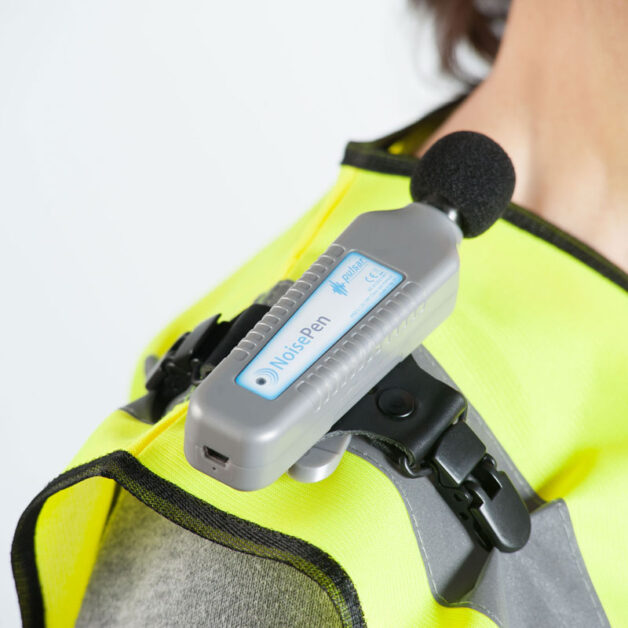
If you use a sound level meter, noise dosimeter or acoustic calibrator, regular calibration is essential to keep your measurements accurate and traceable.
Over time, performance can drift due to environmental exposure, handling or normal component ageing. Regular verification ensures your instrument continues to perform to the required standard.
Why Calibration Is Required
A sound level meter is a precision measurement device. The microphone can be knocked, internal components can experience wear, and environmental exposure can affect performance, often without any visible signs.
If your noise measurements ever need to withstand scrutiny, during an audit, a regulatory inspection or even a legal case involving Noise-Induced Hearing Loss, you must be able to demonstrate traceability and verified accuracy.
Calibration protects you by:
- Confirming the instrument is performing to the required standard
- Maintaining traceable documentation
- Ensuring compliance with current legislation
- Updating firmware and replacing worn components where necessary
Buying a sound level meter is an investment. Calibration preserves both its technical integrity and its long-term value.
Is Annual Calibration Mandatory?
Many international standards specify that sound level meters should undergo periodic verification, often at intervals of up to two years, depending on usage and risk profile.
However, best practice in many occupational and environmental applications is to recalibrate annually. This reduces the likelihood of drift going unnoticed and ensures continuous traceability of measurements.
At Pulsar, annual calibration also extends your instrument warranty by a further 12 months, providing both technical reassurance and long-term protection of your investment.
In practice, the right interval depends on:
- The regulatory framework you operate under
- The criticality of your measurements
- How frequently the instrument is used
- Your organisation’s risk tolerance
For many users, annual calibration offers a practical balance between compliance, risk reduction and warranty protection.
Field Calibration vs Traceable Calibration
There are two distinct types of calibration, and both are important.
Field Calibration
Field calibration is performed by the user before and after a series of measurements using an acoustic calibrator. It checks the instrument against a known reference level, typically 94 dB at 1 kHz.
This process confirms the instrument has not drifted significantly during use and is normally required for legally defensible measurements.
However, field calibration is limited. It checks performance at one level and one frequency only. It cannot verify the full frequency response of the microphone, complex acoustic parameters such as LAeq or LCpeak, octave band filters or statistical functions.
What Is Traceable Calibration?
Traceable calibration (also referred to as periodic verification or recalibration) is a comprehensive performance assessment carried out in a controlled calibration environment.
During this process, the instrument is tested across a wide range of levels and frequencies to confirm that it meets the relevant international standards, such as IEC 61672 for sound level meters.
At Pulsar, calibration is performed in-house in the UK by dedicated test engineers operating under ISO 9001 quality systems. Upon completion, the instrument is issued with a Certificate of Calibration valid for one year. The certificate clearly states the standard against which the instrument has been tested, providing full traceability for audit and compliance purposes.
For customers choosing annual calibration, the instrument warranty is extended for a further 12 months.
How Often Should a Sound Level Meter Be Calibrated?
Field calibration should be performed before and after each measurement.
Traceable calibration should be carried out periodically, in line with the applicable standards and your organisation’s internal procedures. For many users, this may be every two years.
However, annual recalibration is widely regarded as best practice, particularly in regulated industries or where measurements are critical. It provides continuous traceability, reduces risk, and, for Pulsar instruments, extends warranty protection.
Book Your Calibration
If you are unsure when your instrument was last calibrated, check your certificate or contact our calibration team with your instrument type and serial number.
Regular traceable calibration ensures your sound level meter remains accurate, compliant, and ready to withstand scrutiny, whether in the workplace, during an audit, or in a court of law.