
The Control of Noise at Work Regulations 2005 came into force in April 2006, replacing the earlier 1989 Noise Regulations. They were introduced following European Directive 2003/10/EC and lowered the exposure levels at which employers must take action.
The Regulations were developed to protect workers’ hearing from excessive workplace noise exposure. Although tools and processes are quieter than in the past, uncontrolled industrial noise remains prevalent, particularly in manufacturing and construction environments.
Noise-induced hearing loss remains one of the most common occupational diseases worldwide, and once caused, hearing damage cannot be reversed.
Who Do the Regulations Apply To?
The Regulations apply to employers across all industry sectors where employees are exposed to noise at work. This includes full-time and part-time staff and, in many cases, freelancers operating under the employer’s control.
From April 2008, the music and entertainment sectors have been specifically included. Workplaces such as live music venues, theatres, clubs and restaurants fall within scope where employees are exposed to occupational noise.
Self-employed individuals must also adhere to the Regulations in the same way as employers when their work exposes others to risk.
What Do Employers Need to Do?
The Regulations require employers to prevent or reduce risks to health and safety from exposure to noise at work.
In practice, this means assessing workplace noise risks, implementing control measures at source where reasonably practicable, and ensuring legal exposure limits are not exceeded. Provision of hearing protection should be considered only after other control measures have been explored.
Employers must also provide information, instruction and training about noise risks and, where required, carry out health surveillance for employees regularly exposed above defined thresholds.
Understanding Exposure Action Values and Limits
The Regulations define lower and upper exposure action values and an exposure limit value.
The lower exposure action value is 80 dB(A), and the upper exposure action value is 85 dB(A). The exposure limit value is 87 dB(A) at the ear, taking into account hearing protection. Peak sound pressure limits are defined using C-weighting.
Exposure is determined by considering both noise level and duration over a working day or week.
For a detailed explanation of what the 80, 85 and 87 dB thresholds mean in practice, read our full guide to workplace noise action values.
How Is Workplace Noise Measured?
To establish compliance, employers must determine how loud the noise is and how long employees are exposed. Noise is measured in decibels using A-weighting for average levels and C-weighting for peak or impulsive noise.
Personal exposure may be calculated by measuring sound pressure levels at different work locations and tasks, then calculating an average based on time spent in each area.
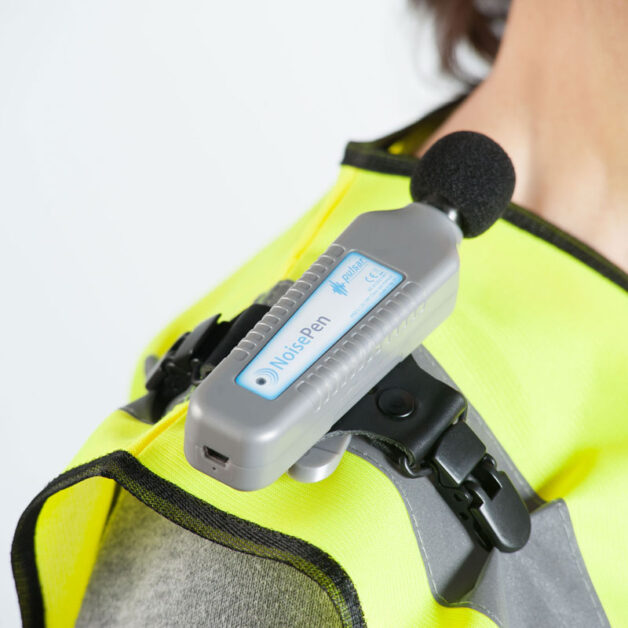
Measurements are typically taken using compliant sound level meters or personal noise dosimeters capable of calculating daily exposure values.
Accurate, properly recorded data provides essential evidence of compliance and may be critical in defending future hearing loss claims.
For a step-by-step guide to carrying out a compliant workplace noise risk assessment, see our detailed guide.
What Equipment Is Required for Compliance?
Workplace noise assessments should be carried out using instruments compliant with recognised standards such as IEC 61672.
Calibration before and after measurement using an acoustic calibrator ensures accuracy and reliability.
Personal noise dosimeters provide a practical solution where workers move between locations throughout a shift.
Health Surveillance and Ongoing Management
Where employees are regularly exposed above the upper exposure action value, employers must implement health surveillance, including hearing checks. The purpose is early detection of hearing damage and continuous improvement in noise management practices.
Proving Compliance: What Happens If the HSE Visits?
In recent years, many safety professionals have reported visits from the Health and Safety Executive (HSE) requesting evidence of occupational noise monitoring. In these situations, it is not sufficient to state that employees are unlikely to be at risk. Employers must be able to demonstrate clearly that they have assessed workplace noise, considered the relevant exposure action values, and taken appropriate control measures under the Regulations.
Enforcement officers may request documentation of risk assessments, measurement records, calibration records, and evidence of any control measures implemented. They may also expect to see records of employee information, training and health surveillance where required.
Failure to provide adequate evidence of compliance can result in enforcement notices or further investigation. In addition to regulatory action, employers may face civil claims for noise-induced hearing loss. Individual claims for minor hearing loss or tinnitus have historically ranged in the thousands of pounds, with additional legal and insurance costs potentially increasing the financial impact on the business.
Maintaining accurate measurement records and a clear audit trail of actions taken is therefore not simply a regulatory formality. It is an essential part of protecting both employees and the organisation.
Further Guidance and Support
For further guidance on managing workplace noise, you can visit the HSE’s website for official information and resources. You may also download our free Employers’ Guide to Controlling Workplace Noise for practical advice on understanding and applying the Regulations in your organisation.
We hope this guide has provided a clear overview of your responsibilities under the Control of Noise at Work Regulations 2005. If you would like to discuss workplace noise measurement, compliance requirements or suitable monitoring equipment, please contact our team.