10-Year Warranty on Selected Pulsar Products
Selected products include an extended 10-year warranty when calibrated annually.
Online Training with Noise Products
Access our Online Noise Awareness Course at no extra cost when you buy our noise monitoring equipment.
Licence-Free Software with Pulsar Products
Use our software without subscriptions, recurring charges or additional licence fees.

In-House Technical Support Team
Get expert help from our in-house technical support team whenever you need assistance with your equipment.
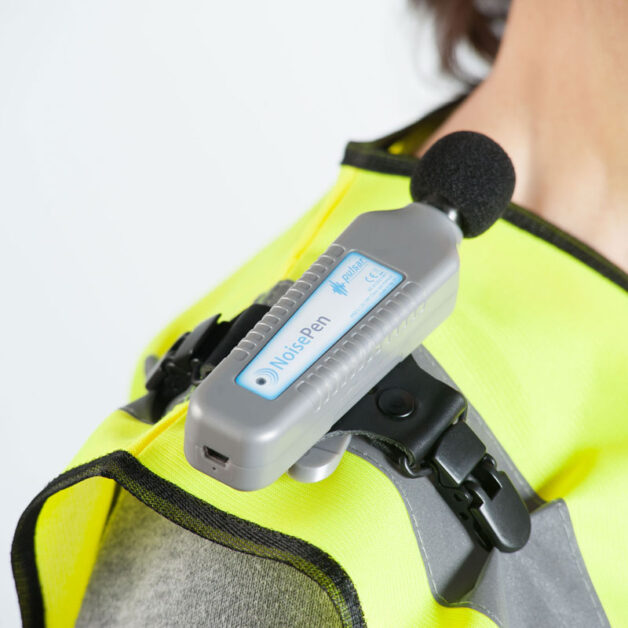
Shop personal dust monitors for air monitoring, helping assess exposure and support better dust control.
Need Help Choosing or Using Our Products?
Ask our AI Assistant or chat directly with our team.
Call: +44 (0)1723 339715 | Start Chat
Showing all 2 resultsSorted by price: high to low

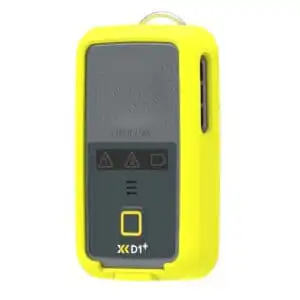
The XD1+ Personal Dust Monitor is a lightweight, wearable device that provides accurate, real-time monitoring of respirable dust directly at…

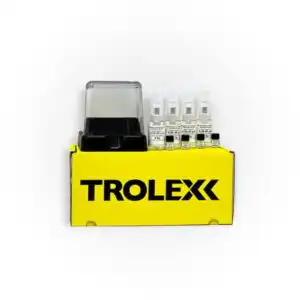
Introducing the Trolex Compliance Pack+ – a specialized sampling solution designed for efficient compliance testing. Simply link your XD1+ device…
Lung disease from dust exposure is the single biggest cause of death in the workplace. Most of these deaths are preventable using the hierarchy of controls and with effective prevention through accurate, real-time dust monitoring.
The hazards of dust in the workplace are well recognised, with the HSE producing specific guidance on dealing with hazardous dust such as silica, wood, asbestos, and other dangerous substances.
Pulsar Instruments supplies wearable, self-contained personal dust monitoring devices that allow you to protect your employees from the hazards of dust in the workplace. These dust meters offer real-time detection of harmful particulates in even the harshest of conditions and can help you act before workers are harmed.
Answers to common questions about dust monitoring.
Exposure to dust can cause several serious health issues including COPD, lung cancer, asthma and other respiratory issues.
Many work activities can create dust. These include but are not limited to:
Dust is classed as a substance that is hazardous to health under the Control of Substances Hazardous to Health Regulations (COSHH) (2002).
The definition of a substance hazardous to health includes dust of any kind present at a concentration in air greater than 10mg/m3 (as a time-weighted average over 8-hours) of total inhalable dust. The limit for respirable dust is 4mg/m3 (as a time-weighted average over 8-hours).
The COSHH Regulations require employers to assess the risk to their employees and prevent or adequately control employees’ exposure to these substances.
Employers should make a suitable and sufficient assessment of the risks to health from the dust(s) concerned and the steps that need to be taken to meet the requirements and should provide employees and other people on premises with suitable and sufficient information, instruction, and training.
Prevention of exposure to dust should be an employer’s first objective, as many forms of dust can be eliminated from the workplace.
Where it is not reasonably practicable to prevent exposure to dust, a combination of engineering and process controls may be appropriate, but ensuring you’re using the right combination is crucial.
Methods for controlling dust include:
Personal Protective Equipment (PPE), which is inclusive of protective clothing and respiratory protective equipment (RPE), may be provided for welfare purposes, but its use as part of your organisations’ strategy for controlling exposure should only be considered when all other reasonably practicable measures have been taken.
10-Year Warranty on Selected Pulsar Products
Selected products include an extended 10-year warranty when calibrated annually.
Online Training with Noise Products
Access our Online Noise Awareness Course at no extra cost when you buy our noise monitoring equipment.
Licence-Free Software with Pulsar Products
Use our software without subscriptions, recurring charges or additional licence fees.