You do not need octave band filters on your sound level meter to measure noise accurately. In fact, octave bands have very little to do with how accurately a sound level meter works, but what they do is the split audible into smaller frequency bands, therefore allowing you to identify the frequency content of noise. So whilst this is no more accurate than a sound level meter without octave bands what they do is give you more information about the makeup of that noise, and that information is not normally required for standard noise measurements (whether that is noise at work or environmental noise).
Noise Measurements Without Octave Band Filters
Most noise meters take measurements using an ‘A’ frequency weighting which aims to replicate the way the human ear responds to noise frequencies; that is it is less sensitive to noise at the lower and higher frequencies, and most sensitive about 2-4KHz (the frequency range of a typical babies cry coincidentally!). The resulting decibel readings are expressed as dB(A).
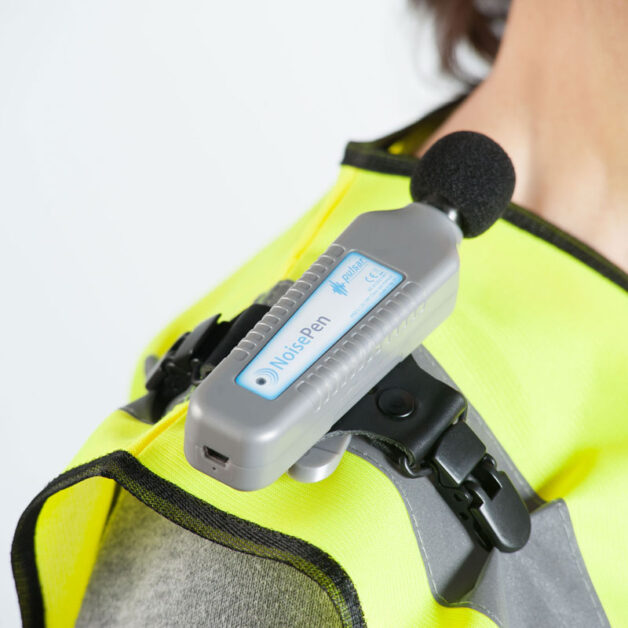
You can use sound level meters without octave band filters, such as the Nova Noise at Work Sound Level Meter, to measure occupational noise accurately without the additional expense of an octave band meter.
Noise Measurements With Octave Band Filters
Sometimes for specific work, an acoustic consultant for example, wants to get more information about the frequency content of noise. They will use an Octave Band Sound Level Meter which uses filters to split the spectrum into about 10 frequency bands called Octave Bands because there is one octave between the bottom and top of each band.
The frequency bands usually consist of:
31.5Hz , 63Hz , 125Hz , 250Hz , 500Hz , 1kHz , 2kHz , 4kHz , 8kHz, 16kHz
The sound level meter will measure the noise in each of these octave bands, either all at the same time (known as Real-Time Octave Band Filters, or Parallel filters) or by switching to one band at a time (known as Serial Filters).
Why Are Octave Band Filters Used?
Understanding the individual frequency makeup of a noise source can give clues on sources of noise, direct what Hearing PPE is required as well as direct us to where we need to concentrate noise control efforts.
The advantage of real-time octave band filters to do this is that these measurements can be made automatically at the touch of a button so that none of the bands miss any of the noise during a specific measurement period; in reality this means that overall measurement times can be a lot shorter compared with using serial filters.
Using Octave Bands for Noise Control
The graph below shows a typical octave band spectrum. In this case you can clearly see that the 1kHz and 2kHz bands are showing much higher levels than the others. If you were trying to reduce the noise then efforts should be directed to reducing noise in these frequency bands, incidentally these frequency bands are where the human ear is most sensitive.
Using Octave Bands for Hearing Protection Selection
If you were trying to find the correct hearing PPE, then you would use this information together with the manufactures data on hearing protection to find out the correct level of attenuation for the type of noise you wanted to protect against.
Sound level meters like the Nova Noise at Work uses Octave Bands and will automatically calculate this for you and the Pulsar AnalyzerPlus Software has a wide range of commercially available hearing protection and tells you which PPE matches your needs.