Which to choose, a sound level meter or a noise dosimeter? To understand when you should use a sound level meter (SLM) to measure noise or a noise dosimeter we must first understand a little bit about noise measurement itself.
Although great strides in noise control have been made by companies since the introduction of the 2005 Control of Noise at Work legislation, there is more to be done; the problem of understanding noise remains in several industries and many people don’t know where to start in finding ways to reduce noise at source as well as control the impacts on their staff. This is evidenced by the questions we often get asked, including “How do we measure noise?” and “How do I know who’s affected?”. Hopefully, we can shed some light on these here.
What Are We Measuring When We Assess Noise?
Put simply noise is sound we do not want to hear. Noise levels that are over 80dB for a length of time have the capacity to damage our hearing causing Noise-Induced Hearing Loss, Tinnitus and other effects. We measure both A-weighted sound (a weighting that is added to mimic the human ear) and C-weighted (a weighting that helps us understand peak levels of noise – C-Peak) in decibels (dB).
For noise at work, we might be interested in how noisy a piece of machinery is or a process, and we are concerned with finding out the overall noise exposure of an individual during their working day/shift or week. This is the LEP,d (daily exposure) or LEP,w (weekly).
Noise Exposure Action Values and Legal Limits
The 2005 Regulations set both exposure Action Values, where the employer must take action to reduce noise and exposure, and Limits, which are the absolute maximum you cannot go over for both A-weighted and C-weighted noise taking into account the wearing of hearing protection.
The image here shows the Action and Limit values for A-weighted average noise of an 8hr period in dB(A). The C-weighted action levels are 135 and 137 dB(C) and the limit value is 140dB(C).
How to Protect Workers from Excessive Noise
First, you must measure the noise levels. You have a choice of two measurement methods for this: a personal Noise Dosimeter and/or an Integrating Averaging Sound Level Meter.
When to Use a Noise Dosimeter
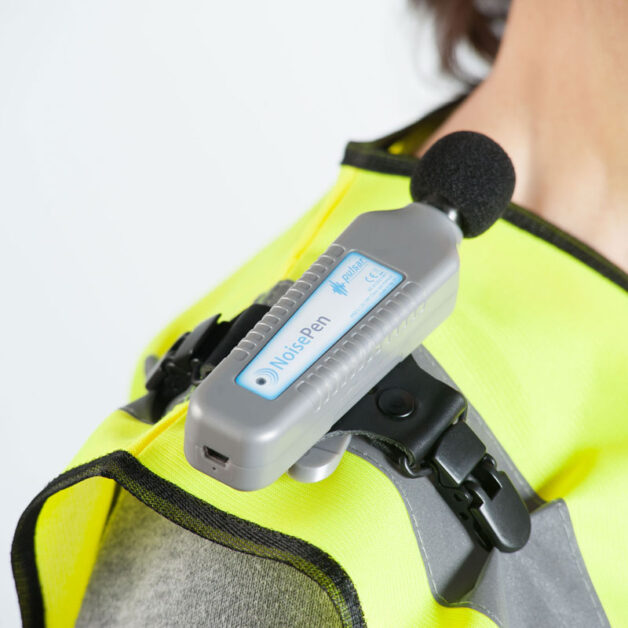
Noise dosimeters should be used when you want to find out the direct noise exposure of an employee. Normally they are small cable-free shoulder worn devices that measure noise right at the worker’s ear, in other words, the actual noise affecting the worker. They measure both the LAeq and LCPeak values as well as calculate daily exposure levels (LEP,d). This method is particularly effective for workers with unpredictable shift patterns, those constantly on the move, or people working in confined or difficult to access areas.
When to Use a Sound Level Meter
While a dosimeter is perfect for personal noise measurements there are some measurements where an SLM is required. For example, if you need to know the overall noise level of a task, piece of machinery or area then you will need a sound level meter. For noise at work the legislation stipulates that you need at least a Class 2 Integrating Averaging meter to give you the data you need for compliant noise at work assessments. Our range of professional sound level meters includes instruments such as the Nova Noise at Work Sound Level Meter, which gives you the A-weighted average noise levels (LAeq) as well as LCPeak, predicted exposure and more.
If you find the overall level of noise is over 85dB(A), some form for hearing protection must be provided to bring the noise level at the ear below this. Your meter should help you choose the correct level of protection either by the HML method or by analysing the frequency content of the noise using octave band filters.
In summary, when you should use a sound level meter or a noise dosimeter
- Use Sound Level Meters when you need to know the noise level of a particular task or process, or how noisy a piece of machinery or area is.
- Use Noise Dosimeters when you need to find out the direct noise exposure of an employee.
If you would like assistance selecting the best product for your needs, please contact our team.