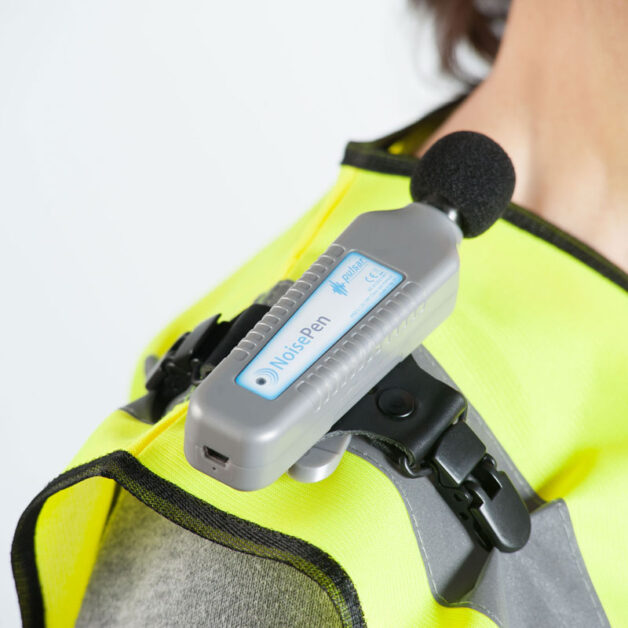

In the last few days, results of a recent US study were reported extensively in the press. It established that people with long-term exposure to loud noise at work or in leisure activities may be at increased risk of heart disease. Researchers found the strongest link in working-age people with high-frequency hearing loss, which is typically the result of chronic noise exposure to loud noise over time.
This is not new. Previous research had already linked noise exposure, especially in workplaces, to coronary heart disease, high blood pressure and other illnesses by looking at decibel levels in the person’s environment. This latest study concentrates on participants’ recollections about their work and leisure-time noise exposure. We agree that both are important considerations when assessing and controlling noise exposure in the workplace. Here we take another look at noise specifically and the many different ways it can affect our health and productivity.
How Noise Affects the Ear
The ear is extremely sensitive. It has three main sections – the outer ear, middle ear and inner ear. The sound pressure wave passes into and through the outer ear and hits the eardrum, causing it to vibrate. The vibration causes the three auditory ossicles (malleus, incus and stapes) in the inner ear to move and transmit the sound to the fluid in the cochlea. The movements in the fluid are sensed there by hair cells. This is what allows us to differentiate between frequencies. Hair cells nearest to the middle ear respond to high frequency and those at the tip of the cochlea respond to lower frequencies. There are around 30,000 hair cells within the ear. When noise is too loud, it begins to kill hair cells in the inner ear. As the exposure time to loud noise increases, more and more hair cells are destroyed. There are plenty of videos to view on YouTube about how our hearing works.
Temporary Effects of Noise Exposure
Noise describes loud, sudden, harsh or irritating sounds. If it is not controlled correctly, it can lead to ear damage on a temporary (acute) or permanent (chronic) basis.
Temporary Threshold Shift
Aaused by short excessive noise exposures such as firecrackers. Leads to mild deafness after the event which is reversible once the noise is removed.
Tinnitus
A ringing or buzzing in the ears caused by an intense and sustained high noise level which can last for up to 24 hours even after the noise has stopped.
Acute Acoustic Trauma
Caused by a very loud bang such as an explosion. This is reversible unless the eardrum has been permanently damaged.
Permanent Hearing Damage from Noise
Repeated or prolonged exposure to loud noise can lead to permanent hearing problems.
Noise-Induced Hearing Loss (NIHL)
A gradual reduction in hearing ability, particularly affecting the ability to understand speech clearly.
Permanent Threshold Shift
A lasting reduction in hearing sensitivity, particularly around frequencies near 4,000 Hz. This can make it difficult to distinguish consonants such as S, F, SH, CH and H.
Chronic Tinnitus
Persistent ringing or buzzing in the ears which may become a long-term condition.
Health Effects of Noise Beyond Hearing Loss
Noise is a nuisance but does not always result in hearing loss. It can make life difficult, unpleasant and restrictive through:
- Chronic stress
- Loss of concentration
- Tension and headaches
- High blood pressure
- Cardiovascular disease
- Sleep disruption
- Irritability and reduced productivity
Noise, Stress and Workplace Productivity
Noise pollution can trigger the body’s stress response, one of its major health effects is chronic stress and the high levels of stress hormones that go with it. As a result, noise pollution has also been linked with health problems such as heart disease, high blood pressure, and stroke. Environmental and domestic noise pollution can also impact sleep quality by preventing sleep and disrupting sleep cycles. And, perhaps most significantly, because chronic stress can lower your immunity to all disease, noise pollution is a general threat to our health and well-being.
Preventing Noise-Related Health Problems
Noise at work can be, and should be, controlled. As an employer, you should not disregard or underestimate the harm a noisy workplace can cause. In the UK, the Control of Noise at Work Regulations set mandatory action levels at which employees’ hearing must be protected.